A suction line can lose prime, admit air or collapse even when its positive-pressure rating looks adequate. By checking the seasonal failure risks, tracing the fault systematically and matching the pipe to the pump’s actual suction duty, you can prevent avoidable stoppages in Katol’s irrigation systems.
Key takeaways
- Check for flattening, air leaks, blocked strainers and loose clamps before replacing pipe.
- Use suction-rated, reinforced PVC matched to pump flow and lift.
- Keep the line shaded, supported and free from sharp bends during operation.
- Drain, clean and store the suction hose straight before long shutdowns.
How Katol’s seasons damage a suction line
A suction line operates under negative pressure, unlike a delivery line that carries water under positive pressure. That difference makes ordinary thin-wall PVC vulnerable to flattening even when its positive-pressure rating looks high. Heat, flooding, cold storage and long idle periods each attack a different part of the assembly.
- Summer heat softens exposed PVC, while direct sunlight accelerates ageing. A sagging section, unsupported bend or sharply tightened clamp can deform the wall and admit air when the pump runs.
- Monsoon flooding covers joints and cracks with mud, hides movement at supports and sends silt toward the strainer. Muddy water also increases blockage risk, forcing the pump to work against restricted intake.
- Winter cold reduces flexibility in PVC and exposes damage when a stored hose is bent, dragged or struck. Water left inside the line can worsen cracking if the pipe experiences repeated cold conditions.
- Long idle periods leave gaskets, foot valves and hose clamps dry or distorted. Rodents, insects, impact and standing water can damage a line before the next irrigation cycle.
These failures produce the same visible symptom: weak or unstable water delivery. A suitable pvc suction pipe katol installation needs a continuous vacuum rating, reinforcement, UV protection and supports suited to the route, not just a nominal diameter or positive-pressure water-pipe label.
Keep the line shaded where possible and inspect it after the first major heat or monsoon change.
Trace the fault before replacing the pipe
Trace the fault before replacing a sound line. A suction pipe that rises continuously to the pump helps prevent trapped air; a high point, leaking joint or failed foot valve can imitate pipe damage.
1. Loss of prime: the pump runs but delivers no water after shutdown or idle storage. Fill the casing and suction line, then check whether water drains back; a leaking foot valve or check valve is the likely cause.
2. Air leakage: look for fluctuating discharge, gurgling, vibration, repeated repriming and a pump that never reaches steady flow. Suction joints can admit air without leaking water, so inspect clamps, gaskets, cracked sockets and threaded connections.
3. Blockage: a dirty strainer, silted foot valve or crushed entrance causes steadily reduced flow. Remove and clean the strainer, then compare flow with the valve open and unobstructed.
4. Collapse: a flattened hose, inward-dented wall or permanently oval section indicates vacuum failure. Stop the pump; do not judge suitability by positive-pressure rating alone, because ordinary thin-wall PVC can collapse under suction.
5. Cavitation: rattling or gravel-like noise, vibration and unstable flow point to low inlet pressure. Excessive lift, long runs, sharp elbows, undersized valves, warm water or high friction reduce NPSHa and trigger it.
If you searched pvc suction pipe for problems katol, use the same fault sequence before buying. Confirm vacuum rating, the applicable standard, test certificate and batch traceability; a larger nominal diameter alone will not cure cavitation.
Complete the pre-monsoon inspection and installation correctly
A pre-monsoon check must find air paths before the pump loses prime. Inspect the entire suction assembly, not only the visible pipe: sun-softened or flattened walls, hairline cracks, threaded joints, solvent-fit sockets, unions, hose clamps, gaskets, the foot valve, pump seal and strainer.
- Replace any pipe that shows cracking, permanent flattening, whitening or soft spots. Use reinforced suction pipe with a stated continuous vacuum rating; a high positive-pressure rating does not prove resistance to collapse under suction.
- Re-make leaking solvent joints and replace distorted gaskets, cracked unions and rusted or loose clamps. Tighten threaded fittings without forcing plastic threads, which can split and admit air.
- Re-route the line so it rises continuously toward the pump. Remove loops and high points that trap air, support long runs, and keep bends within the pipe’s specified bend radius.
- Lift the intake clear of the tank or well bottom, clear mud and leaves from the strainer, and provide enough open area for the pump. Keep the intake submerged as the water level falls so vortexing does not draw air.
- Prime the system and perform the manufacturer’s air-tightness or vacuum test. Check again after the first major temperature or monsoon change.
Before buying replacements, ask a plumbing pvc pipe manufacturer in nagpur for the suction rating, applicable IS or ISO standard, test certificate, batch traceability and technical support. “PVC water pipe” alone is not a suction specification.
Specify suction duty, not just nominal diameter
Specify the suction duty separately from delivery duty: nominal size alone cannot show whether a line will resist collapse. Give the pump supplier the required flow, static lift, suction-line length, water temperature and operating schedule, then check NPSHa after subtracting pipe friction, entrance loss and foot-valve loss.
A larger suction diameter reduces friction; it does not repair an air leak or leaking foot valve.
- Record nominal size and actual inside diameter, maximum suction lift, continuous vacuum rating and operating-temperature range.
- Confirm reinforcement type, minimum bend radius, UV exposure limit and compatibility with muddy, treated or chemically dosed water.
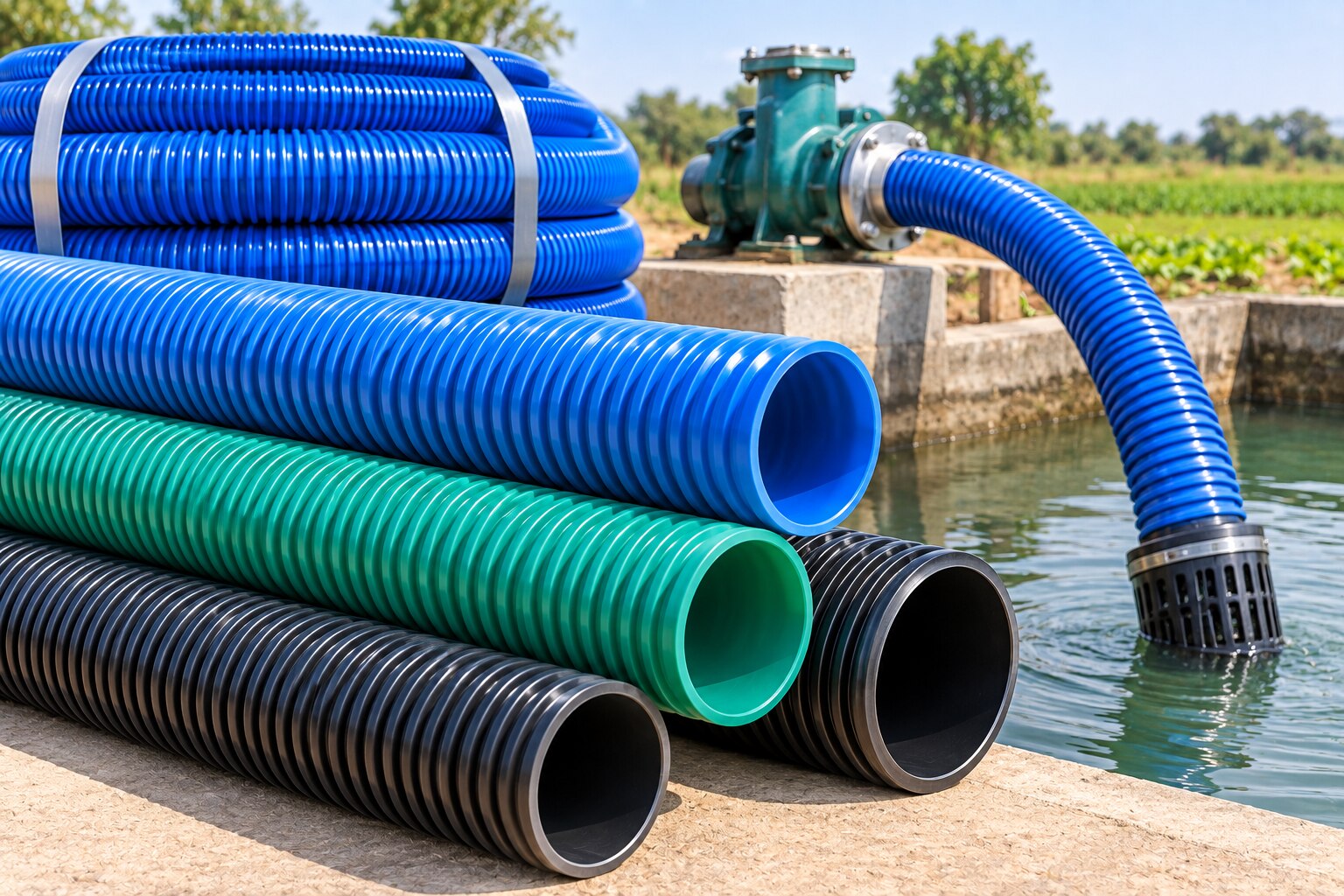
- Use a vacuum-rated reinforced suction pipe or hose. Do not substitute thin-wall water-supply PVC because its positive-pressure rating looks high.
- Match fittings to the pipe: use concentric reducers at the pump inlet, airtight clamps or solvent joints specified for that material, and a strainer and foot valve sized without creating a sharp restriction.
- Ask for a product datasheet, named Indian Standard or ISO/EN standard, vacuum and pressure test certificate, batch number and traceability record. Ask who provides technical support after installation.
| Option | What it means | When it applies |
|---|---|---|
| Positive-pressure PVC water pipe | Resists internal pressure, not necessarily external vacuum | Delivery lines; reject for suction without a vacuum rating |
| Reinforced vacuum-rated pipe | Specified for negative pressure, bending and collapse resistance | Pump suction, especially with lift or long runs |
| Larger suction diameter | Lowers friction and improves NPSHa | Use only with matching reducers and fittings |
Geeta Plasticwood Industries should be asked to confirm these suction-specific figures for the selected batch, rather than relying on colour, diameter or catalogue pressure alone.
Related product
 | Pvc Suction Pipe Product Details: Size/Diameter 0.5 inch Length of Pipe 3m Packaging Type single bundle packing Thickness 1.5 mm Material PVC Working Pressure 2.5... View product → |
Protect the system during use, shutdown and storage
A suction line left full of muddy water through the monsoon can return with a blocked strainer, swollen gasket or hidden crack. During irrigation, keep the intake below the minimum water level but clear of the tank or well bottom; sediment and vortexing can admit air and starve the pump.
- Keep the suction route supported, with no sharp bends or low pockets that trap water and deform the pipe.
- Fit a strainer with adequate open area, anchor it above the bottom, and remove leaves, silt and plastic after every muddy-water event.
- Stop the pump before the water level exposes the intake. Dry running overheats seals and destroys the prime.
- Close the foot valve or isolating valve during shutdown, then release trapped pressure before loosening any clamp.
- Drain the line if freezing, prolonged idleness or severe temperature changes are expected; do not leave it kinked or under vacuum.
- Store the pipe straight on broad supports, away from stones, chemicals, rodents and direct sunlight. Do not stack heavy equipment on it or drag it across concrete.
Before the next cycle, check that the pipe has not flattened, hardened or developed surface cracks, and replace damaged clamps, gaskets and strainers. A plastic pipe manufacturer in Nagpur should provide the continuous vacuum rating, temperature range, batch traceability and test certificate; a high positive-pressure rating does not prove suction suitability.
Ask for technical support when the line repeatedly loses prime after storage.
Frequently asked questions
How do Katol’s seasons damage a PVC suction line?
Heat softens PVC and increases collapse risk, while monsoon flooding introduces debris and cold or long storage can stiffen or deform the line. Inspect the pipe, fittings, strainer and clamps after each seasonal change.
What should you check before replacing a faulty suction pipe?
Trace the fault from the pump inlet to the strainer. Check flattened sections, cracked fittings, air leaks, blocked strainers, loose clamps, sharp bends and excessive lift before discarding the pipe.
How should you complete a pre-monsoon suction-line inspection?
Clean the strainer, inspect the pipe wall and fittings, tighten clamps, replace damaged seals, support the line and confirm that joints remain airtight under the pump’s suction demand.
Why is nominal diameter not enough when specifying PVC suction pipe?
Nominal diameter does not show whether the pipe can resist collapse. Match the line to required flow, suction lift, temperature, bend radius, reinforcement and the pump manufacturer’s inlet requirements.
How should you protect a PVC suction line during shutdown and storage?
Stop the pump, drain and rinse the line, remove debris from the strainer, prevent standing water, avoid sharp coils and store the pipe shaded and supported without heavy objects on it.
Keywords